Every LOWEN GWELS lamb is traditionally hung on the bone to dry age before it is butchered into our lamb boxes. It takes time, but it makes a real difference on the plate. Here is why.
What is dry ageing?
Dry ageing simply means hanging meat, on the bone, in cool and carefully controlled conditions before it is cut up. It is the traditional way butchers prepared meat long before vacuum packs and supermarket shelves.
Why it improves flavour
As the meat hangs, some of its moisture slowly evaporates. Less water means more concentrated flavour – the lamb tastes richer and more savoury.
Why it improves tenderness
Meat contains natural enzymes. While it hangs, these slowly break down some of the muscle fibres, so the meat becomes more tender.
Why it cooks better
Meat that has not been hung can release a lot of water in a hot pan, so it stews rather than browns. Properly hung meat browns well, develops a good crust and stays succulent.
Why on the bone?
Hanging the whole carcass on the bone protects the meat while it ages and keeps its shape. It is the traditional method – and the one we use.
Grass, breed and time
Dry ageing works best with good meat to start with. Ours is 100% grass-fed Hampshire Down lamb from our Cornish fields. Breed, grass and time together are what give our lamb its flavour.
Cooking dry-aged lamb
- Bring it to room temperature before cooking.
- Season simply – it does not need heavy sauces.
- Do not overcook prime cuts: serve leg, chops and steaks a little pink.
- Rest the meat after cooking.
For more ideas, see our lamb cuts guide or try the slow-roast half shoulder. Then choose your lamb box.


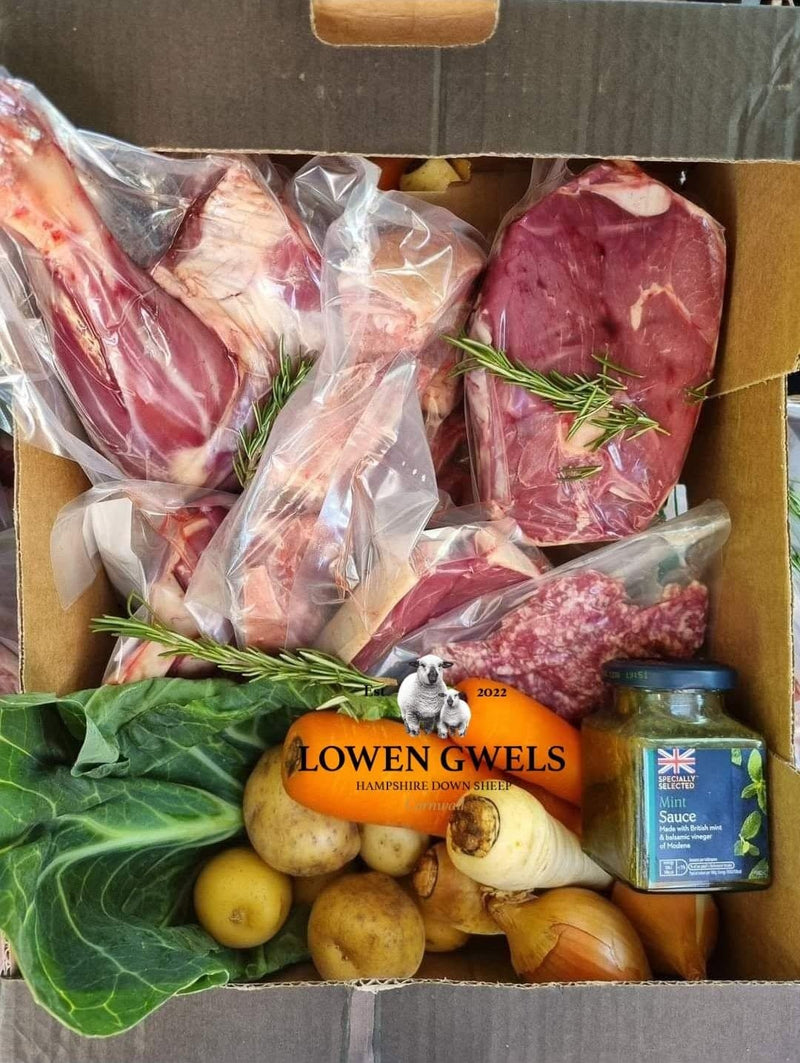
 Shoulder joint1 x ½
 Leg joint1 x ½
 Lamb chopsIncluded
 Lamb steaksIncluded
 Minced lambSmall bag
 Diced lambSmall bag


 Free veg & mint sauce in every box


